|
It is now the Heisei era (2010), some forty years after the passing of
the man of the seafarer, Kyōzō Uozumi (my father's pseudonym). Looking
down upon Miwasaki, the hometown of my father and his son Kyōta (my pseudonym)...
1. Kumano Kodo: Kōya Slope
The Miwasaki district (Shingu City, Wakayama Prefecture) lies near the
southern tip of the Kii Peninsula, on the Kumanonada- sea coast south-west
of Shingu city center just over a low mountain.
Since 1960 (Showa 35), when Emperor Showa traveled on a private car from
Ise through the Kii Peninsula toward Osaka, both the Kisei West Line railway
and National Route 42 have been improved and paved, greatly enhancing transportation
access.
However, this village, surrounded by mountains and sea, retains several
landscapes from the past, possessing a certain charm.
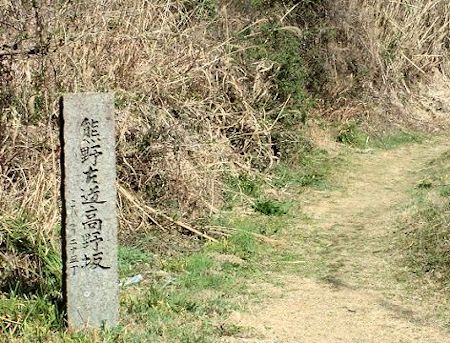
One such place is the Koya slope (also called Koyano slope), a narrow mountain
pass road leading from National Route 42 along the Pacific Ocean's
Kumano-Nada Sea toward the city. It's about three kilometers long.
The Kumano Kodo pilgrimage routes were recognized as a UNESCO World Heritage
Site in 2004 as “Pilgrimage Routes to the Sacred Sites in the Kii Mountain
Range.” There are seven distinct routes, and Kōya Slope is one of them,
forming part of the pilgrimage path connecting Kumano Hayatama Taisha Shrine
and Nachi Taisha Shrine. Did the noble court nobles of Kyoto and Nara walk
this mountain path when they made pilgrimages to the Kumano Sanzan (Kumano
Three Great Shrines) from the Heian period onward?
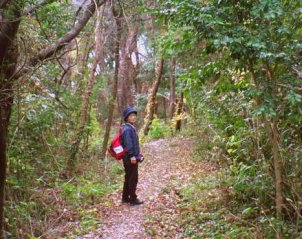
Surrounded by bamboo thickets and mixed woodlands, the rocky path is moss-covered in many places. Passing through areas that seem to exude a spiritual aura, or when the tranquil scenery of the Kumano Sea appears below, one might find themselves nodding in agreement, thinking, “Well, that makes sense.” Fortunately or unfortunately, few tourists visit. This might actually make it a hidden gem among the region's World Heritage sites.
That's not to say the route lacks points of interest.
* Stone Pavement at Miwasaki-side Entrance
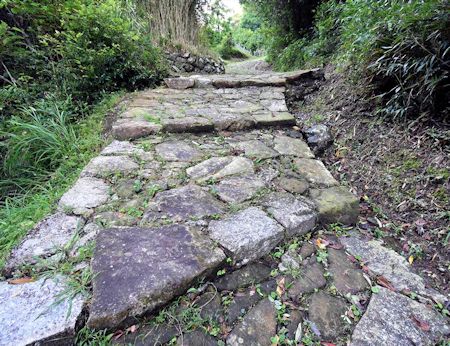
This is the entrance to Koya-saka Slope, on the Miwasaki side. It's
less than a hundred meters long, yet the moment you step onto the moss-covered
stone pavement, the birdsong grows lively—it's quite mysterious. You
might even hear the croaking of crows.
* Kumano-nada Sea Observation Deck
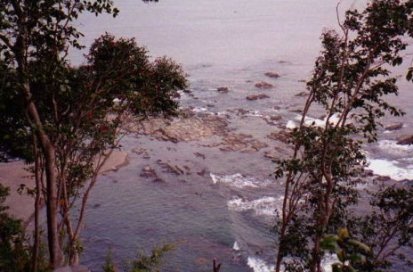
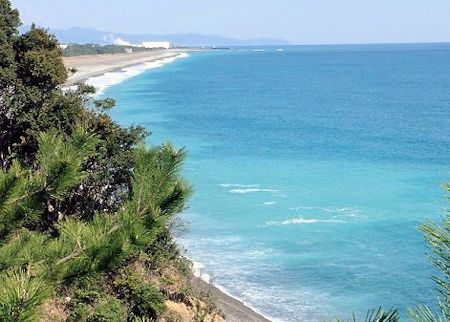
About ten minutes along the path, a sign for the “Observation Deck” appears. Following it, you pass through a dome-shaped thicket tangled with vines to the right, where the view suddenly opens wide toward the Pacific Ocean.
It's a sheer cliff, with a cedar observation deck perched above. Climbing the stairs and looking straight down, you see the large and small waves of the Kumano Sea crashing against the shore, spraying up mist.
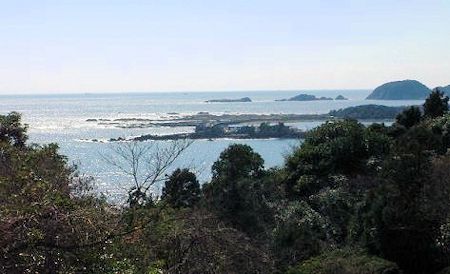
The view varies depending on whether the sea is rough or calm, but the panorama featuring several small islands near and far is truly spectacular.
Especially when you lift your gaze from the waves below the cliff and two
small islands (Suzushima and Kushima) fill the center of your field of
vision, the sight is a feast for the eyes not to be missed.
* Wide-angle view of the stone monument
at the Hirotsuno-side entrance.
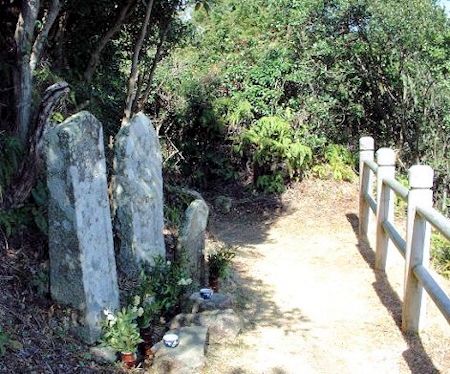
As you approach the Shingu-side exit (mouth) of Hirotshno Entrance, you
reach a landing where the view opens up, offering a sweeping panorama of
Oji Beach and the Kumano Sea. Here stands the Mitarai Monument. It consists
of two stone pagodas engraved with the Six-Character Name (Namu Amida Butsu).
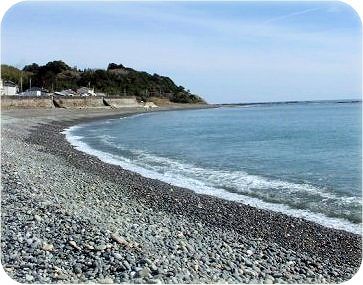
The view of Oji Beach seen from here is praised by guidebooks as “the premier sightseeing spot in the area,” and it may well live up to its reputation as a “famous spot renowned for its sound” along the Kumano Kodo. Indeed, the sound of waves lapping against the pebbles of Oji Beach comes through, a strangely clear, gentle rustling.
2. The Sandy Beach and Two Small Islands
East of the causeway connecting Miwasaki Fishing Port to Suzushima Island
lies a stretch of sandy beach. Locally known simply as “the beach,” it
is deeply intertwined with the lives of Miwasaki's residents.
Near the causeway, small fishing boats are hauled ashore and lined up, fish are laid out to dry, and fishermen mending nets can be seen.
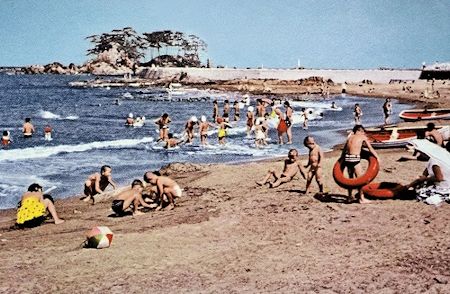
Further east (pictured above), it becomes a summer swimming beach and a playground for children. However, with no major facilities or shops, don't expect a lively atmosphere.
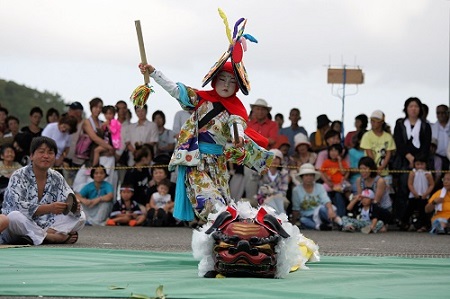
In autumn, it becomes the stage for the “Whale Dance,” the main event of the village festival. Young men, dressed in splendid costumes, sing and dance to the rhythm of flutes and drums.
In winter, it's where the female divers gather around bonfires. They
warm their chilled bodies and munch on roasted sweet potatoes.
The sand here isn't the pure white, fine sugar-like sand of beaches like Nachi or Kii Shirahama. It's grayish and coarse. Pebbles washed by the waves, along with various seashells, are scattered here and there. If you stop by, please take off your shoes, feel the fine pebbles underfoot, pick up a flat stone, and toss it toward the sea. Compete to see who can skip it the most times—three hops, five hops.
* Suzushima and Kushima islands
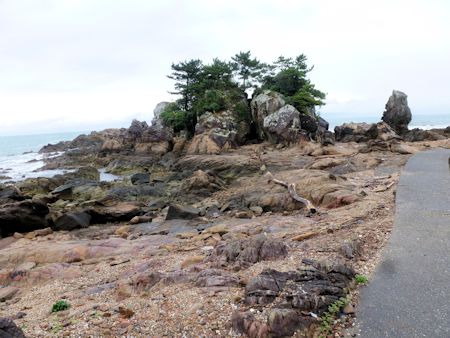
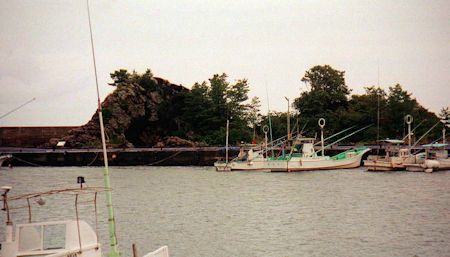
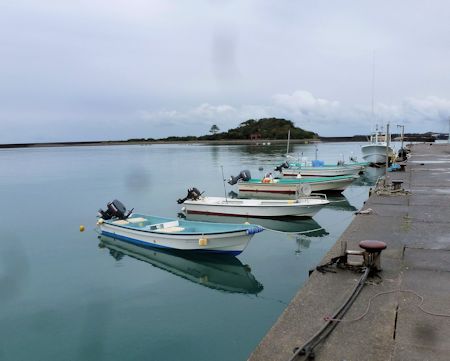
Just in front of Miwasaki Fishing Port, the small islands of Suzushima
and Kushima float side by side.
Suzushima is connected to the mainland by a causeway from the boat landing,
so start here. Walking around it takes less than ten minutes, yet you can
savor its simple charm. Rugged rock faces, delicate wildflowers, solitary
pines, and the lapping shore... Untouched by human hands, you can appreciate
its inherent character.
| Suzushima |
 |
|
 |
|
The distant view of the Kumano mountain range from here is quite a sight. It possesses a quiet, unadorned beauty distinct from other famous tourist spots.
To reach Kushima, walk about 200 meters west from Suzushima Island across
the caisson bridge. The offshore view from this bridge along the way is
also one of the outstanding sights. The waves crashing in from the Pacific
Ocean are fierce, making you appreciate the rocky shore's washboard-like
surface.
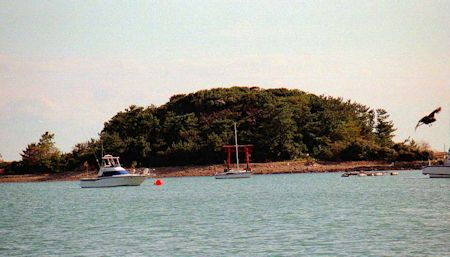
| Kushima |
 |
|
 |
|
Kushima is a famous spot for “crinums”, the city flower of Shingu City.
In summer, they bloom everywhere across the island. Various other natural
monument plants also grow in clusters, so enthusiasts will surely want
to linger. A small shrine enshrines the patron deity of fishermen.
Though considerably larger than Suzushima, this small island remains untouched, left entirely as nature intended. While it may lack dramatic contrast, it deliberately embodies a part of Miwasaki's unique character.
3. Village Festival and Whale Dance
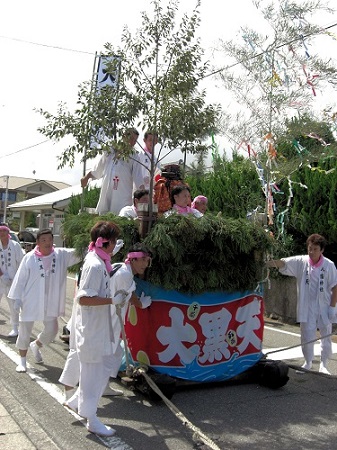
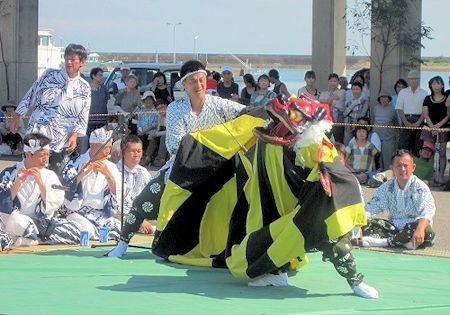
The village festival has always been, and remains today, the largest annual event in Miwasaki. Held on September 15th, the day of the Grand Festival at Hachiman Shrine, the town's atmosphere begins to build two days prior with the Tengu Dance. Festival musicians parade through the town, performing at doorsteps. Accompanied by the lively sounds of their flutes and drums, a young boy selected that year from the lower grades of elementary school dances wearing a tengu mask.
On the day of the Grand Festival, the Tengu Dance continues somewhere in
the morning. The main event begins at ten o'clock. From in front of
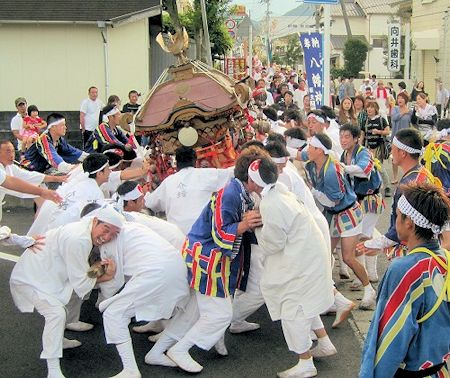
Hachiman Shrine, the Ebisu, Daikoku, and Nijihiko festival floats (danjiri)
charge down the main street, bumping and jostling each other repeatedly
for over a kilometer all the way to the fishing port, creating a town-wide
commotion.
Most children run pulling the reins of one of the floats, while parents
cheer their child's float at the top of their lungs.
Around midday, when the festivities peak, the local folk song and dance“Whale
Dance” begin on the sandy beach. Even today, spectators flock from surrounding
towns to see this performance on the grand stage of the autumn festival.
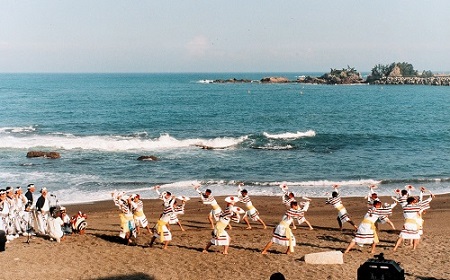
This is Miwasaki, where until recently, the spouting of whales could occasionally be seen offshore. Young people dressed in the traditional attire of fishermen who once hunted whales sing and dance to the lively sounds of flutes and drums.
Accompanied by the musicians' songs, a dozen or so people sit in a circle and dance, mimicking the motion of throwing a harpoon. This is the “dance.” Both sets of lyrics mention “O-Ise-san.”
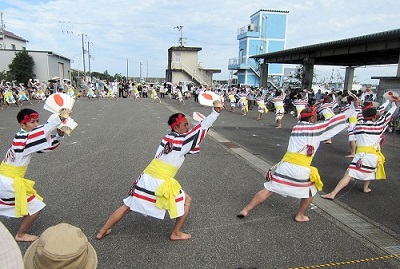
「Whale Dance」〝Dance of Feudal Lord Palace〟
Holding Hinomaru fans in both hands. Dressed in bright headbands and festival costumes, they dance and twirl to the accompaniment of flutes and drums.
(Yo-yo-yeah)
The Miwasaki gang strikes out, yeah (Haah, the Miwasaki gang, yeah)
Parents join in, children join in
At the front lathe, attach the spindle, yeah (Haah, attach the spindle, yeah)
No time to spare, like cicadas swirling
The group prospers, the lord's group, yeah (Haah, the lord's group, yeah)
The master prospers, forever and ever
I wish to become bamboo, the castle's bamboo, yeah (Haah, the castle's bamboo, yeah)
This is the celebratory sign bamboo
The ship has arrived at Gokashō Bay, yeah (Haah, Gokashō Bay, yeah)
Now then, let's go to Ise-sama
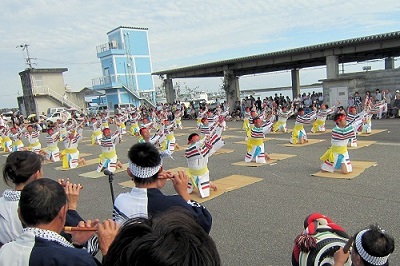
「Whale Dance」〝Dance wearing Figured Cloth〟
Young men sit in rows on mats spread across the sandy shore, one hand holding a Hinomaru fan, the other a tube filled with beads, symbolizing a harpoon used to spear whales. Each time the dancers raise their fans and toss the tubes, the beads clatter and sparkle.
(Yo-yo-yeah)
Today I beat the cloth (A-yo-yo-yo-yo)
Today is a lucky day, I beat the cloth
My lord, come out, bring your child too (Ah-kinuta)
What a pillow this is (A-yo-yo-yo-yo)
What a pillow this is Good,
I wake in the middle of the night (Ah-kinuta)
The waterwheel at Yodo's rapids (Ayoyoi)
The waterwheel at Yodo's rapids
Spinning round and round, waiting for whom? (Ah kinuta)
Ask the long-nosed one offshore (Ayoyoi)
Ask the long-nosed one offshore
The handsome one comes, comes from behind (Ah kinuta)
The flute that blows like Ise's (Ayoiyoi)
The flute that blows like Ise's Resounds all the way to the Miyagawa (Yoyoie)
4. Miwasaki and Sano in the Man'yō-shū
The Man'yō-shū is considered Japan's oldest anthology of poetry,
compiled over some three hundred years from the early fifth century (400s)
during the reign of Emperor Nintoku to the mid-eighth century (700s) during
the reign of the Emperor Junnin. It consists of twenty volumes and approximately
4,500 poems, many of which are still frequently cited in various contexts,
as you know.
It seems hard to believe that several poems within it describe Miwasaki
and Sano in Shingū City, Wakayama Prefecture. Yet, this is indeed the case.
Even though the imperial court—the cultural center of the time—was in Kyoto,
also in the Kinki region, and even though the Kumano Sanzan Shrines faith
spread among the court nobility of the era, eventually becoming known as
the “Kumano pilgrimage,”
As history progressed into the early modern Edo and Meiji periods, the
Kumano Sanzan and Koyasan continued to draw devout pilgrims as sacred sites
within the Kii Mountains. Yet, the small fishing village tucked away in
the southern corner of the Kii Peninsula had become merely a place they
passed by without a second glance... or so common sense might suggest.
However, in the Man'yō era, it seems poets traveled from the capital far to the north of the Kii Mountains to visit Nachi Taisha and Hayatama Taisha along the Kumano Sea. Among them, a few poets took an interest in the remote coastal villages of Miwasaki and Sano, which is likely why such poems remain.
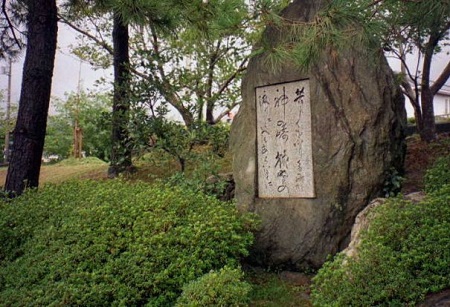
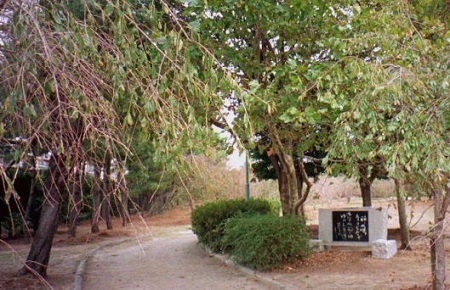
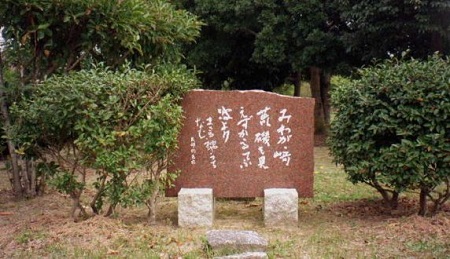
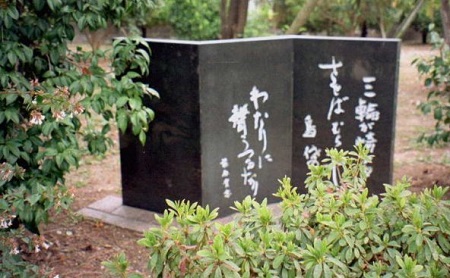
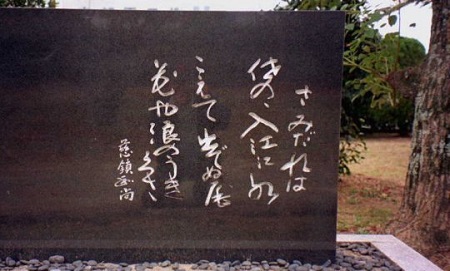
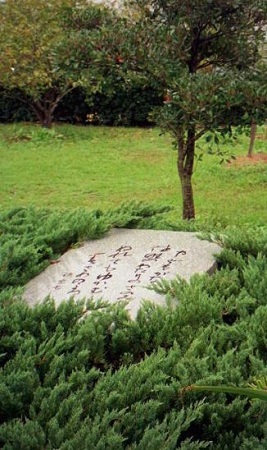
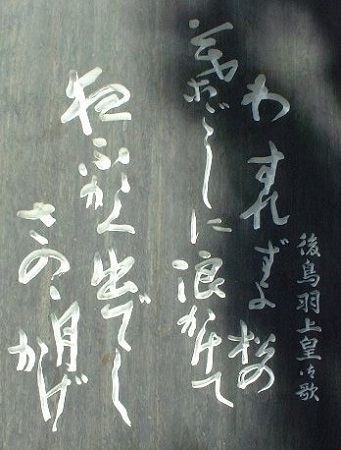
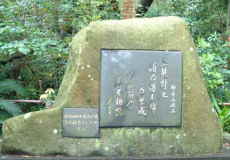
On the west coast of Miwasaki, where it meets Sano, lies Kuroshio Park, a place of rest for the elderly and a playground for children.
At key points along the park, stone monuments inscribed with poems appear,
including several from the Man'yō-shū. We conclude this section by
introducing eight of these poems below.
Originally Written in Japanese
Someday, 2010
Translated into English under the help of DeepL
January 7, 2026
English Reading (27:13) on
|